Will My Scoliosis Curve Get Worse? Understanding Risk Factors for Progression
After a scoliosis diagnosis, this is perhaps the biggest question we hear in the clinic: “Will my scoliosis curve get worse?”
We understand this worry completely. The answer is not a simple yes or no. It depends entirely on several measurable risk factors of scoliosis. We evaluate all of these factors to determine the best monitoring and treatment plan for you or your child.

The Biggest Scoliosis Risk Factor: Growth Remaining
For children and adolescents, the single greatest predictor of progression is how much growth they have left. The spine is most likely to curve rapidly during the adolescent growth spurt.
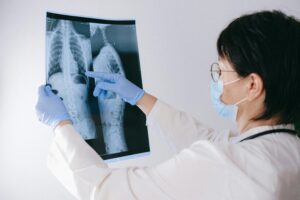
- Monitoring: Doctors use bone age tests (like looking at hand or hip X-rays) to estimate exactly how much growing your child has left. If the curve is mild but the child is still growing, close observation is necessary every few months.
- Post-Growth Stability: Once growth stops (when the patient reaches skeletal maturity), the risk of a curve getting significantly worse drops sharply. If a curve is under 30 degrees when growth stops, it is very unlikely to progress into adulthood.
Other Key Factors We Evaluate
We consider these points carefully when predicting the curve’s behavior:
- Severity (Cobb Angle): The size of the curve is a major factor. A small curve (under 25 degrees) is far less likely to progress than a large curve (over 40 degrees). Larger curves carry more momentum and can even progress slightly in adulthood.
- Curve Location: Where the curve is located matters. Curves that involve the upper back (thoracic spine) tend to be more rigid and slightly more prone to progression than curves located only in the lower back (lumbar spine).
- Gender: Girls are much more likely than boys to have a mild curve that eventually progresses to the point of needing bracing or surgery. This is due to differences in growth patterns.
The Role of Active Management
Even with high risk factors, you are not passive in this process. Active management through bracing and physical therapy is key to changing the outcome.
- Bracing: A brace is an excellent tool for growing children with moderate curves. It acts as an external force to help prevent the curve from progressing during the high-risk growth years.
- Targeted Exercises: Specialized scoliosis exercises (like the Schroth Method) empower the patient to stabilize their spine. These exercises strengthen the deepest core muscles and teach the patient to actively hold a corrected posture throughout the day. This active stabilization can help slow or stop progression, especially when used consistently and combined with bracing.
For adults with degenerative scoliosis, the curve may slowly progress due to arthritis and joint wear. Here, physical therapy focuses on building the strength to support the spine against this progression, managing related pain, and improving balance.
If you are concerned about progression, schedule a consultation at our scoliosis clinic in West LA. We will provide a clear, personalized risk assessment and a comprehensive plan.